
Guangdong Hongtuo Instrument Technology Co.,Ltd
 |
| Place of Origin: | China |
| Brand Name: | Hontotest |
| Certification: | ISO,GB/T,JB/T |
| Model Number: | DX-6600M |
| Minimum Order Quantity: | 1set |
|---|---|
| Price: | USD16,699.00-USD17,999.00 |
| Packaging Details: | Standard export wooden case |
| Delivery Time: | about 3 days |
| Payment Terms: | D/P,T/T, D/A, L/C |
| Supply Ability: | 1000 sets per month |
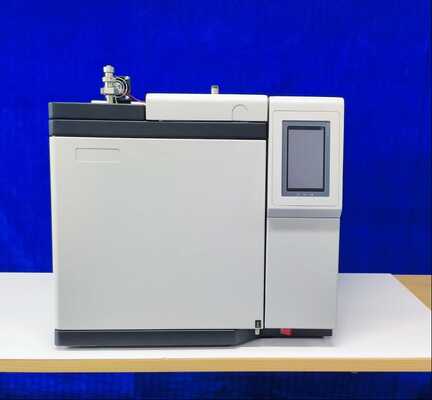
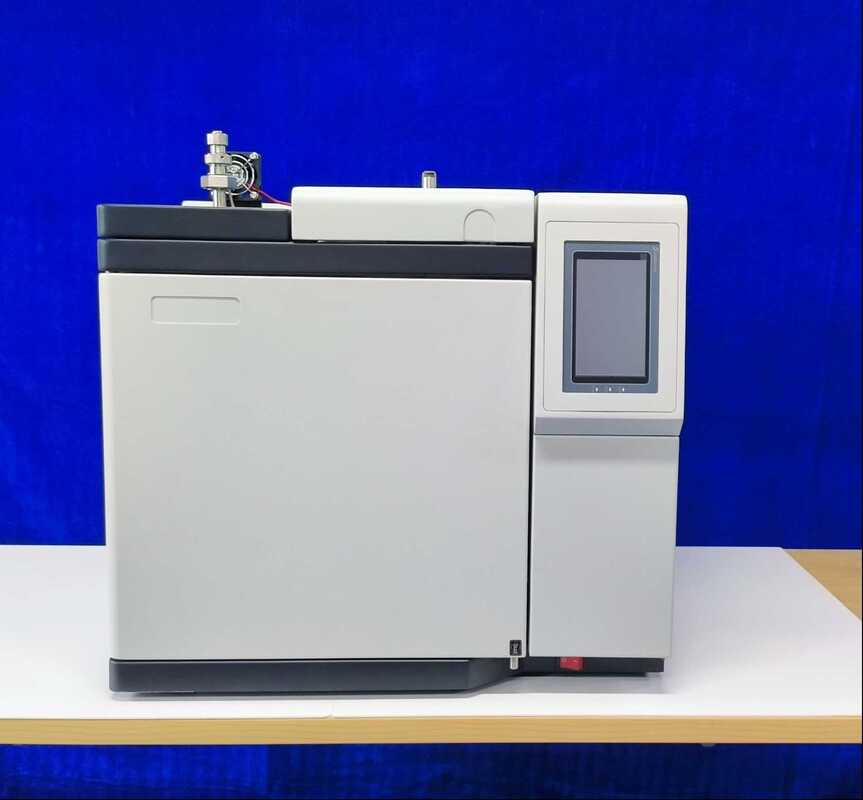
| Name: | RoHS 2.0 Pyrolysis Gas Chromatograph | Phthalate Testing Analyzer For Plastic And Polymer Materials | Inlet Type: | Split/Splitless Pyrolysis Inlet |
|---|---|---|---|
| Inlet Temperature Range: | 100°C To 400°C Above Ambient Temperature | Flame Ionization Detector Detection Limit: | 1×10-11 G/s (n-hexadecane/isooctane) |
| Temperature Accuracy: | ±0.1°C | Heating Rate: | 0.1-40°C/min, In 0.1°C/min Increments |
1.Product Overview
RoHS is the European Union's legislation restricting the use of hazardous substances in electrical and electronic equipment (EEE). Its full name is the "Restriction of Hazardous Substances Directive." This directive primarily regulates the material and process standards of electrical and electronic products, making them more beneficial to human health and the environment. Initially, the directive established limits for the use of six substances in electrical and electronic products: lead, mercury, cadmium, hexavalent chromium, polybrominated biphenyls, and polybrominated diphenyl ethers. On June 4, 2015, the Official Journal of the European Union (OJ) published the revised RoHS 2.0 Directive (EU) 2015/863, officially adding DEHP, BBP, DBP, and DIBP to the list of restricted substances. Following the publication of this revised directive, EU member states were required to transpose and implement it in their respective national regulations by December 31, 2016. Furthermore, starting July 22, 2019, all electrical and electronic products (except medical and monitoring equipment) exported to the EU will be required to comply with these restrictions. Starting July 22, 2021, medical devices (including in vitro medical devices) and monitoring equipment (including industrial monitoring equipment) will also be subject to these restrictions.
Testing for the four phthalate esters in electrical and electronic products requires pulverizing, extracting, cleaning, and contaminating the electronic samples before testing with the appropriate instruments. This initial sample preparation is time-consuming. In March 2017, the Py/TD-GC-MS method was officially approved by the International Electrotechnical Commission (IEC) (a national standard has also been established, pending approval). This method is used to analyze phthalates restricted by the RoHS Directive (IEC 62321-8:2017) for the regulation of electrical and electronic products. As a low-profile alternative to Py/TD-GC-MS, Py/TD-GC has been extensively tested and shown to generally meet the RoHS 2.0 phthalate screening requirements.
Compared to traditional Soxhlet extraction, the Py/TD-GC coupled system allows for rapid screening of phthalates in electrical and electronic products. This method requires no pretreatment and eliminates the need for organic solvents. Results can be obtained directly from weighed samples, making it simpler and faster.
2. Applications
Four phthalates in polymers regulated by RoHS 2.0
3. Features
4 .Instrument Technical Parameters and Specifications
| Item | Performance Specifications |
| Inlet Type | Split/Splitless Pyrolysis Inlet |
| Inlet Temperature Range | 100°C to 400°C above ambient temperature |
| Flame Ionization Detector Detection Limit | 1×10-11 g/s (n-hexadecane/isooctane) |
| Column Oven Temperature |
3°C to 400°C above ambient temperature; Accuracy: ±0.1°C Heating Rate: 0.1-40°C/min, in 0.1°C/min increments. Cooling Rate: Column chamber from 250°C to 50°C, no more than 8 minutes. Temperature Program Repeatability: no more than 1%. Initial and Final Temperature Time: 0.1-256 minutes. |
|
Other Features
|
The instrument utilizes a multi-processor parallel operation mode, making it more stable and reliable. A variety of high-performance detectors are available, including FID, TCD, ECD, FPD, and NPD. Up to three detectors can be installed simultaneously. The FID detector has an auto-ignition function. |

Contact Person: Mrs. Julie Zhong
Tel: 86-13267004347
Fax: 86-769-2318-1253
Tensile Universal Testing Machine / Strength Testing Machine For Leather Rubber Plastic